IEC 61400-3:2009
Methodological basis used for the simulation campaign described here.
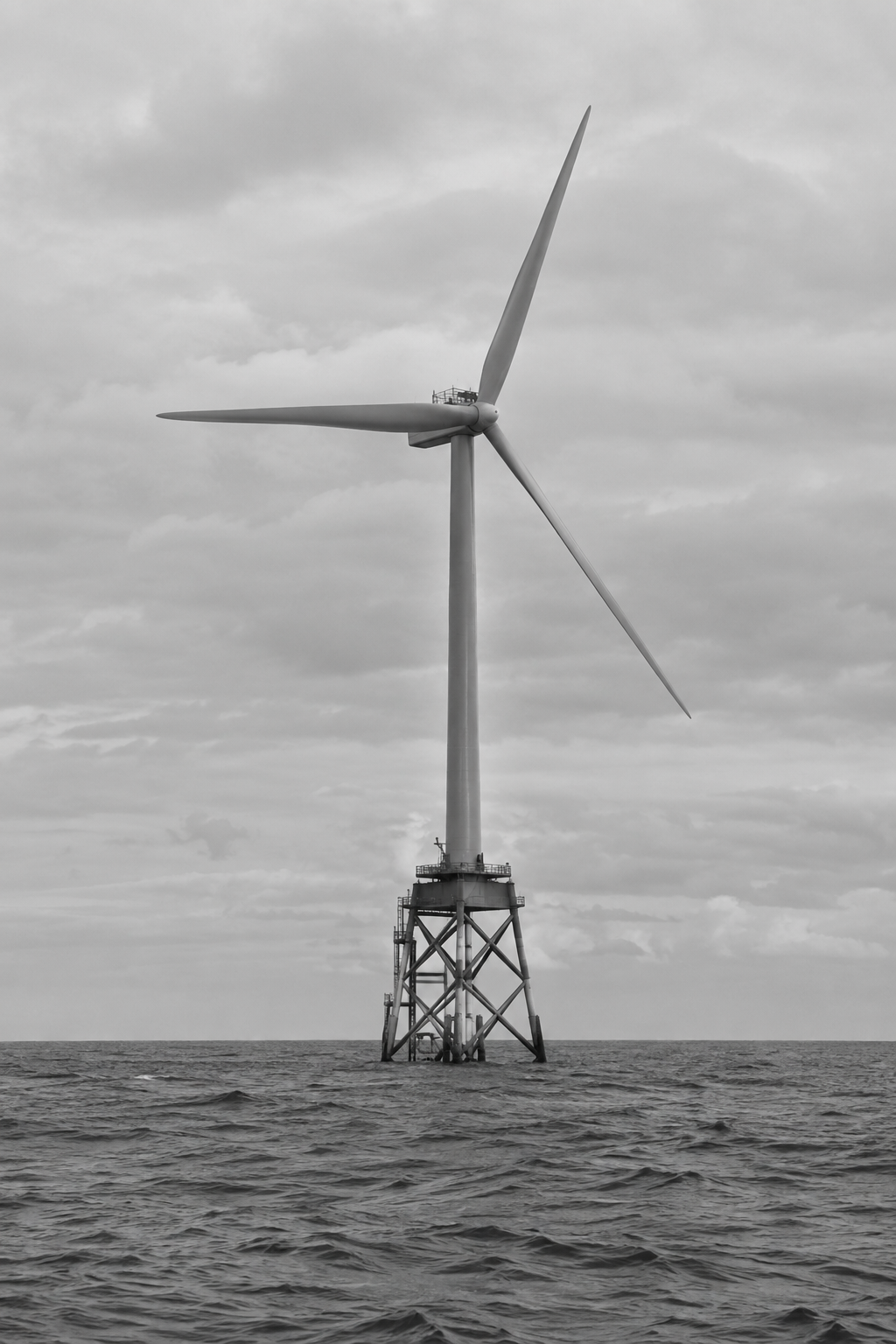
Research / Dynamic response
Explore the simulated tower-top response of a jacket-supported offshore wind turbine under uncontrolled and actively controlled conditions.
The interface presents a selected post-transient interval from a numerical simulation and allows direct comparison of horizontal structural response.
Simulation context
Interactive result
Loading response data…
The explorer could not load its data. Please refresh the page or use the research overview.
Reference model & methodological basis
Sources supporting the reference turbine, jacket model, structural-dynamics implementation and active-control context.
Jonkman, J., Butterfield, S., Musial, W. & Scott, G. (2009). Definition of a 5-MW Reference Wind Turbine for Offshore System Development. NREL/TP-500-38060.
SourceVorpahl, F., Popko, W. & Kaufer, D. (2013). Description of a basic model of the “UpWind reference jacket” for code comparison in the OC4 project under IEA Wind Annex 30. IEA Wind Annex 30 / OC4.
SourceSong, H., Damiani, R., Robertson, A. & Jonkman, J. (2013). New Structural-Dynamics Module for Offshore Multimember Substructures within the Wind Turbine Computer-Aided Engineering Tool FAST. ISOPE 2013.
SourceBäumer, R. (2018). Active vibration control using the centrifugal forces of eccentrically rotating masses. Doctoral thesis, Technische Universität Hamburg.
SourceBai, H., Aoues, Y., Cherfils, J.-M. & Lemosse, D. (2021). Design of an Active Damping System for Vibration Control of Wind Turbine Towers. Infrastructures, 6(11), 162.
SourceStandards & guidance
Standards and recommended practices informing the modelling and assessment framework.
Methodological basis used for the simulation campaign described here.
Recommended-practice context for fatigue design of offshore steel structures.
Recommended-practice context for geotechnical and foundation considerations.